
Sculptural work with lime plaster (Cotswolds, England)
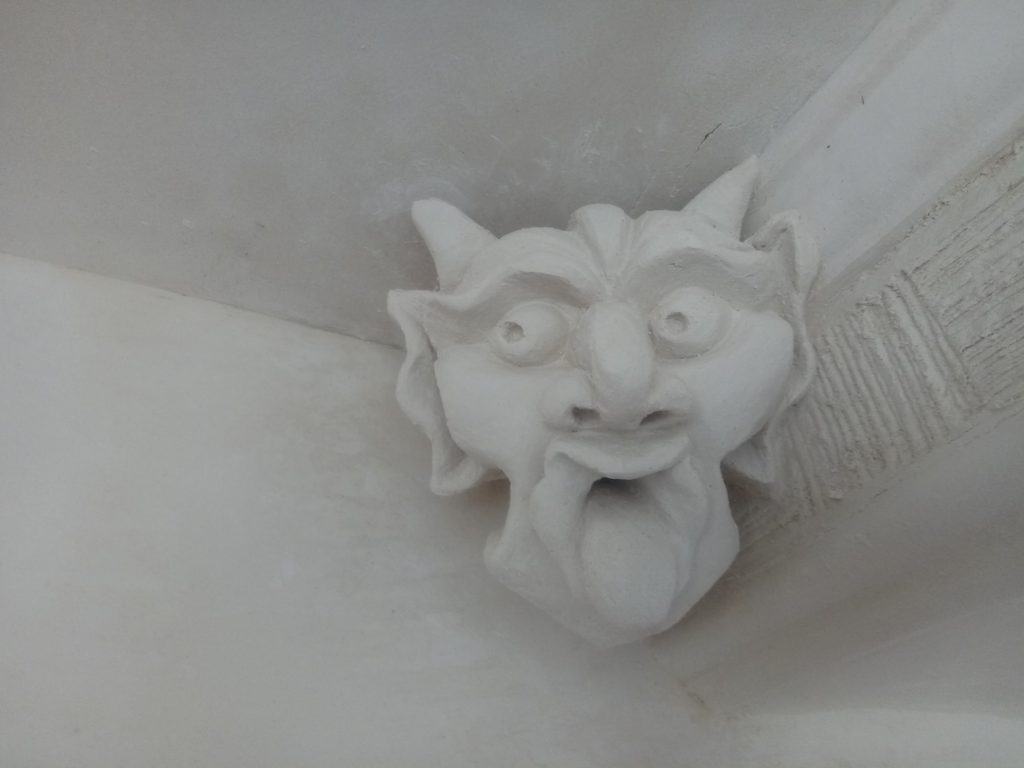
This gargoyles are part of a new decorative ceiling with an Elizabethan style. Around 24 individual gargoyles were created with a grotesque approach.
Lime render with silicate glaze (Sant Quirze del Vallés, Catalonia)
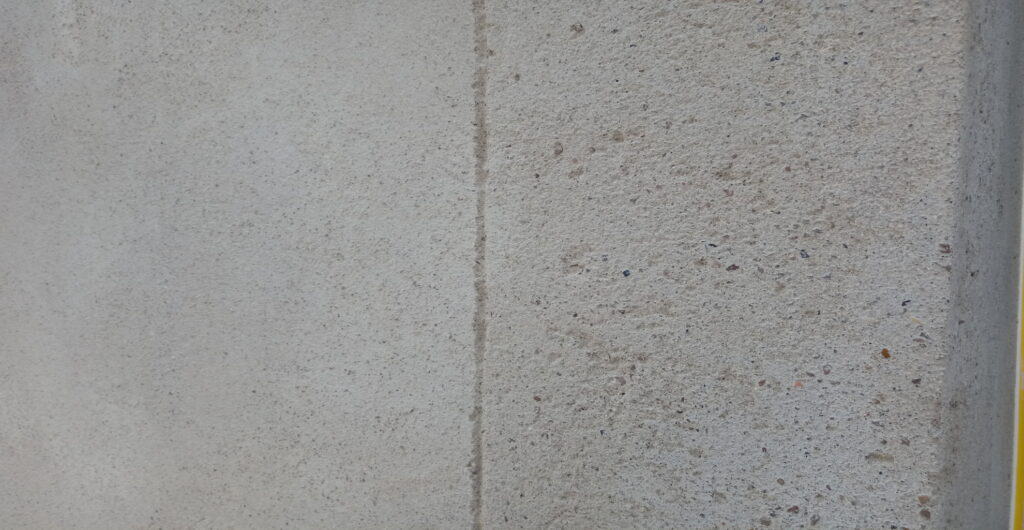
The objective of giving it the same look as the original facade was achieved. It receives a special framing with different tones and textures around the door and window openings.
Elizabethan ceiling (Cotswolds, England)
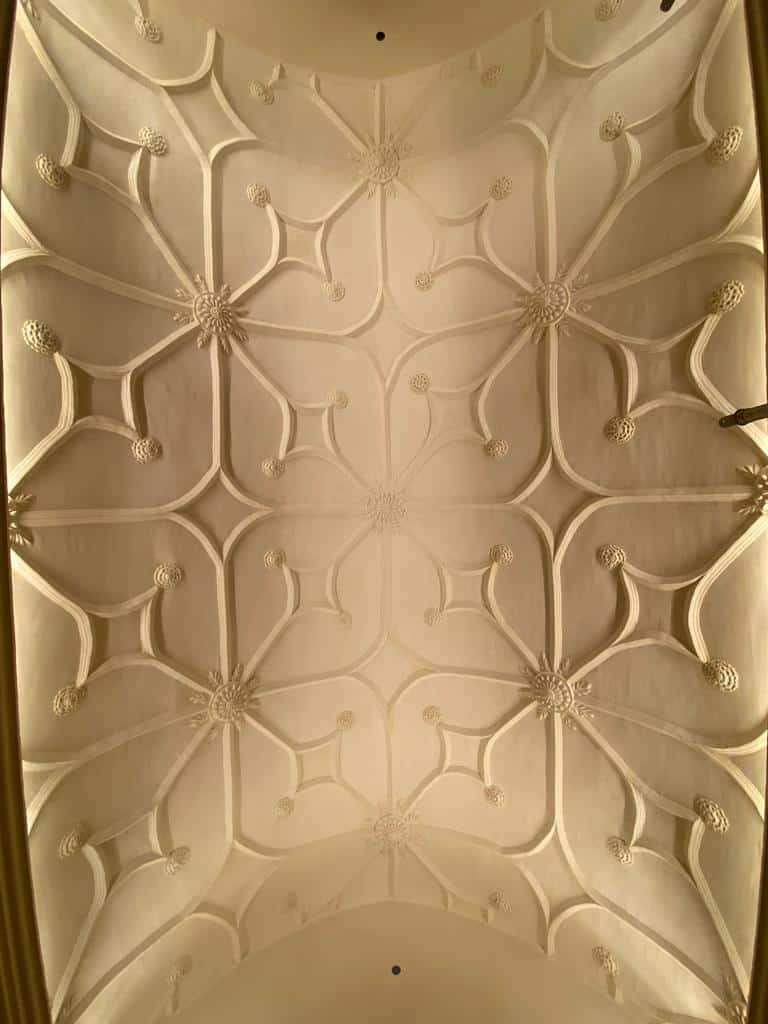
Using the same materials, techniques and designs form the Elizabethan period.
Decorative art work in the gardens of Dumfries House (Escocia, Inglaterra)
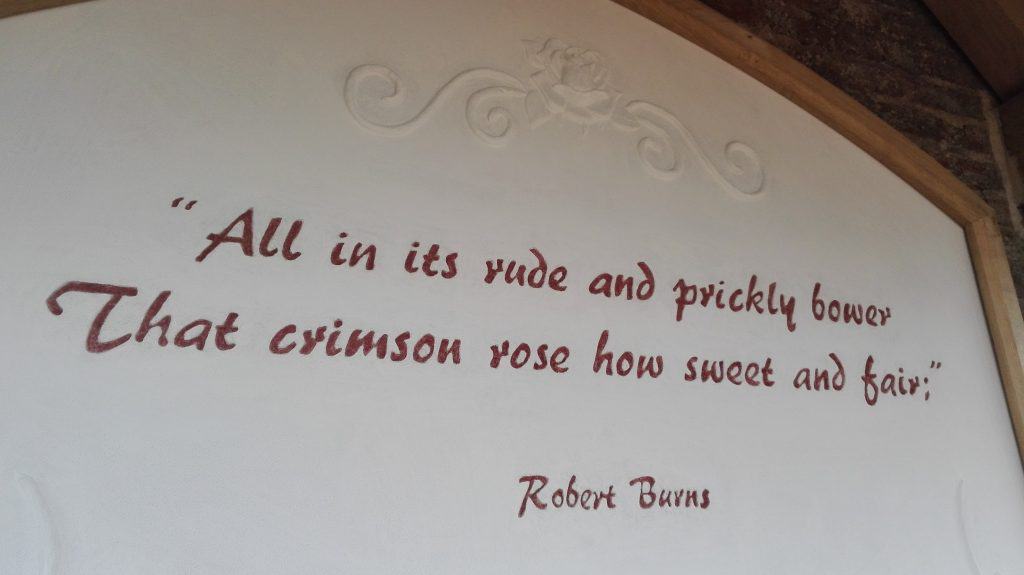
This artwork made with lime plaster combined two different techniques, pargetting and sgrafitto. Floral ornaments and quotes from the local poet Robert burns about gardening where chosen for this pieces located in this public gardens.
Stamps in clay plaster (Barcelona)
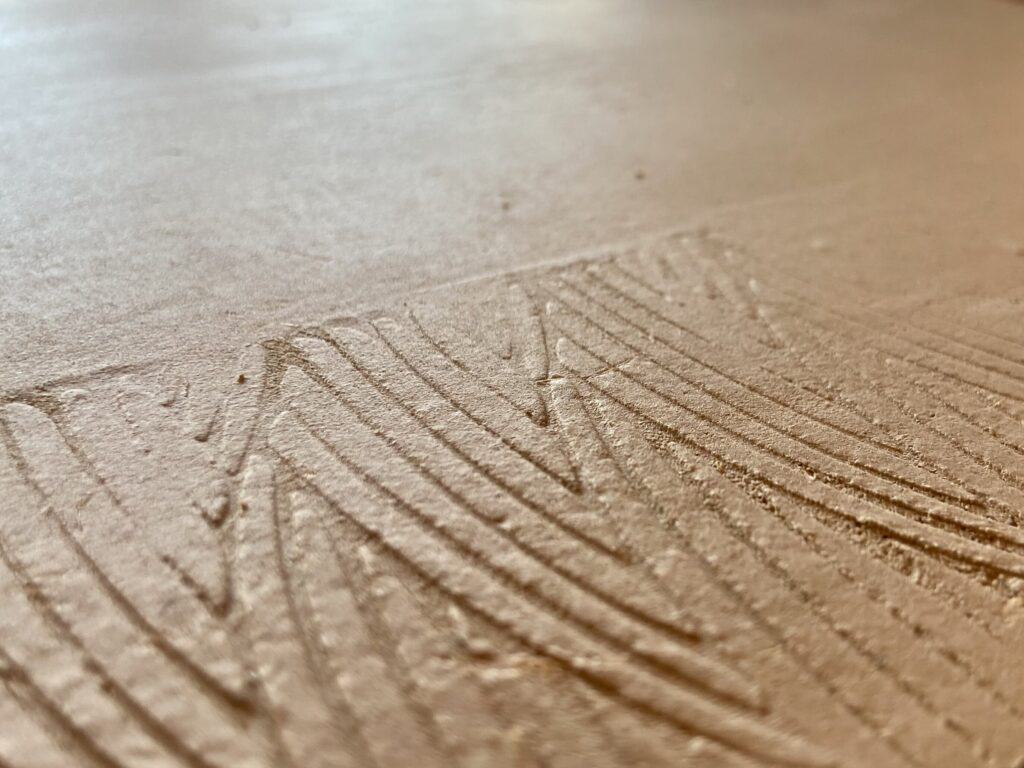
Small details make big differences
New Elizabethan ceiling (Norfolk, England)
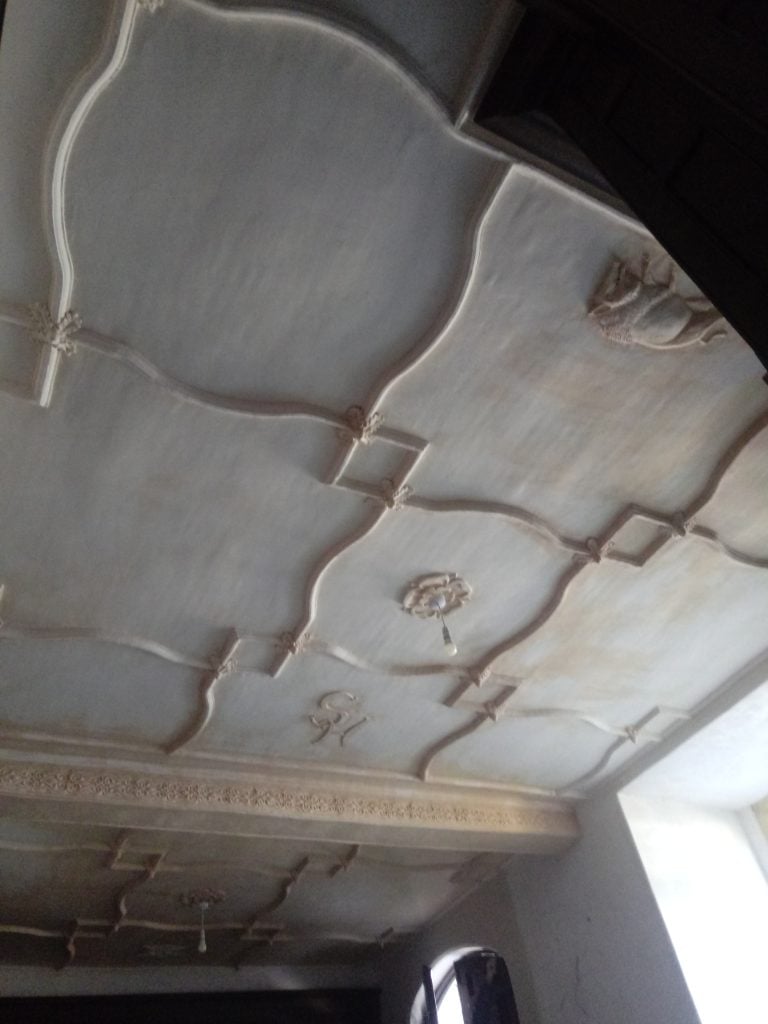
As the building dates from the Elizabethan era, the ceiling in this hall was made using the same sort of designs materials and techniques. All mouldings and relieves were made in situ with lime plaster
Mural with local earth and fibres (Panama)
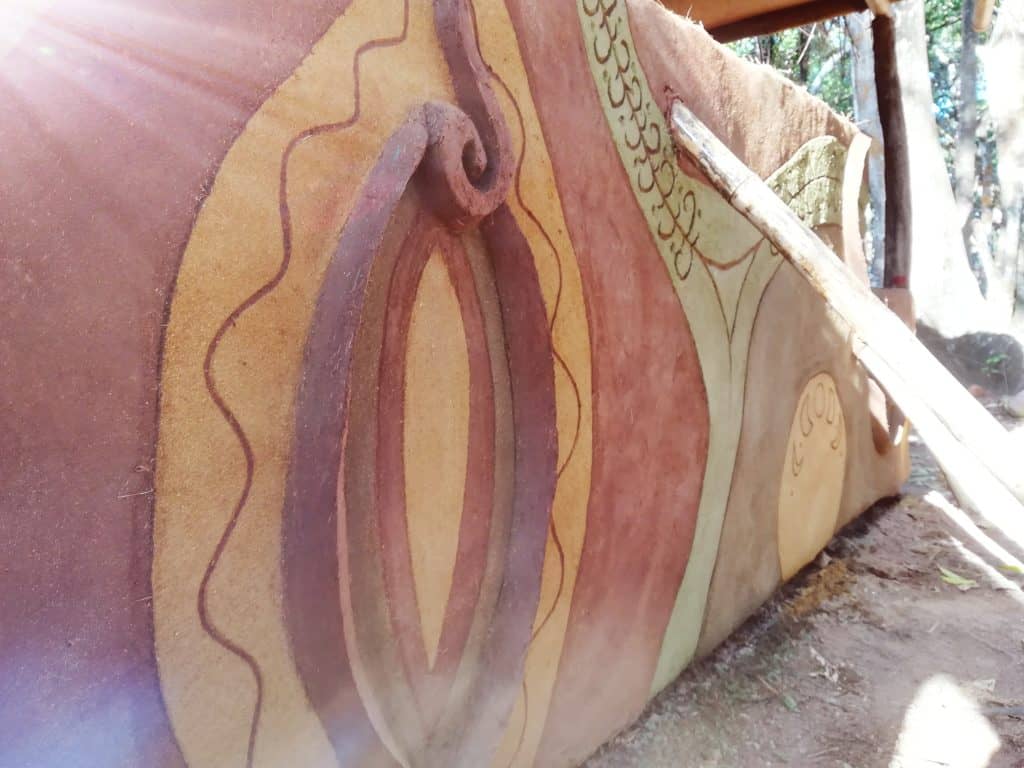
All the raw materials for the creation of this mural where obtain from less than a km around this site on the sea side of the Caribbean sea. We found different coloured clay soils and sand around the river, and we used the fibres from the vegetation around, such as coconut and palm leaves. So […]
Sculptural shapes with raw earth and straw (Barcelona)
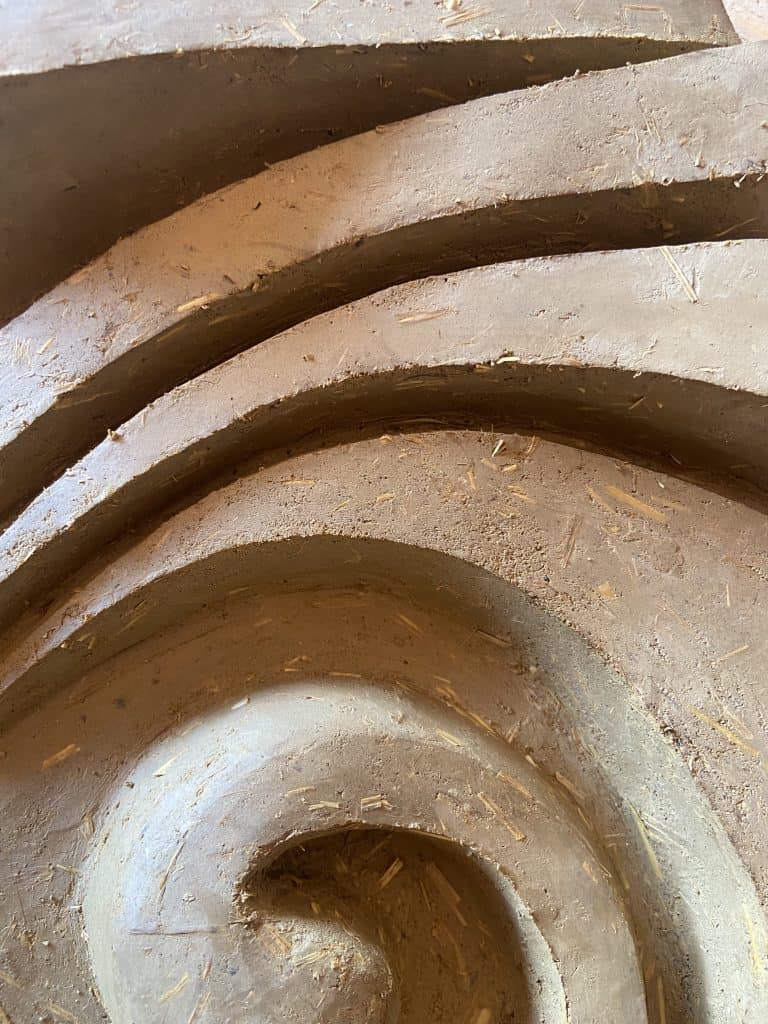
Creation of volumes at any scale, just add decorative details or to create the general shape of a space.
Art with lime plaster (England)
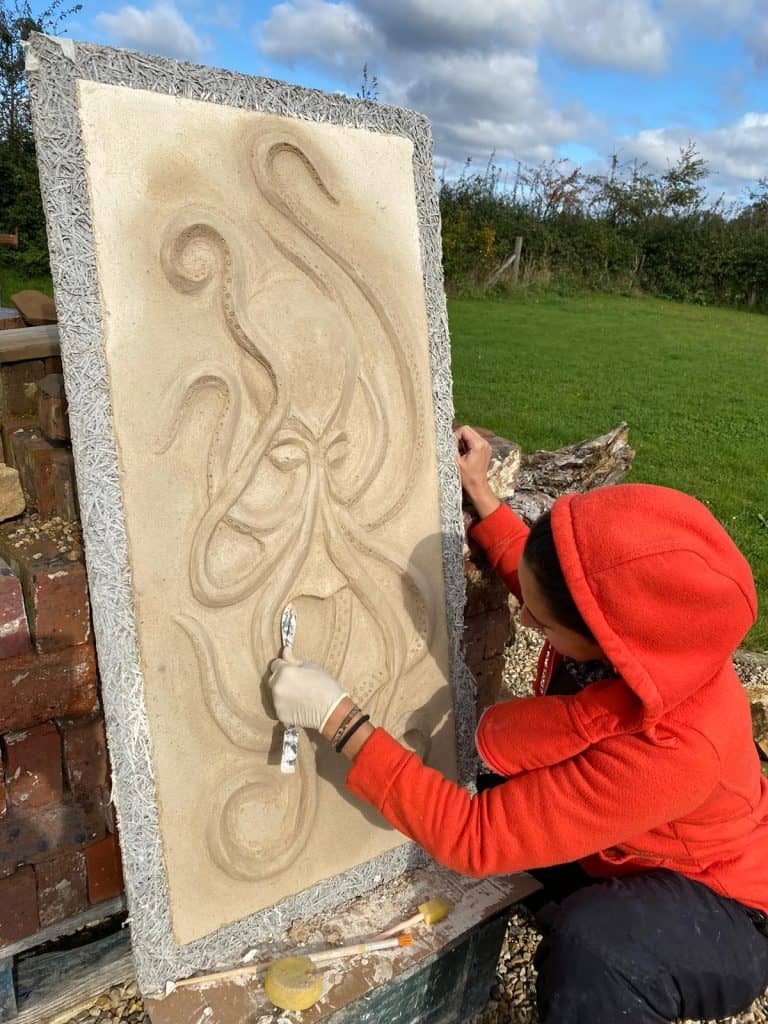
Artistic piece made with lime plaster on a board. Using the same traditional materials and tecniques as if it was done on a wall.
Plastering in straw bale buildings (Catalonia)
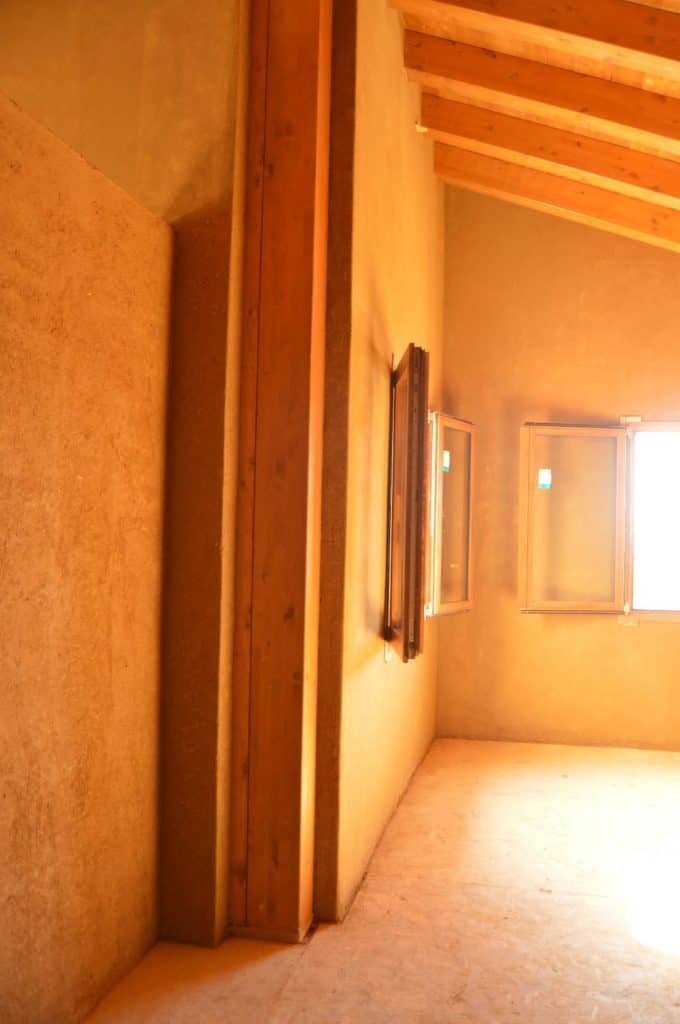
Clay plaster interiors and lime render in the facades. Both are healthy and sustainable materials. They have hygroscopic properties and the vapour of water can travel through its open structure to find its way out. This way the building remains dry and we can achieve optimal indoor humidity levels for healthy indoor environment.